
FREE CPD PROGRAM
Multiple Sclerosis In General Practice
A comprehensive, practical CPD program combining the power of online learning, an interactive webinar and a patient identification activity with the option of in-practice support.


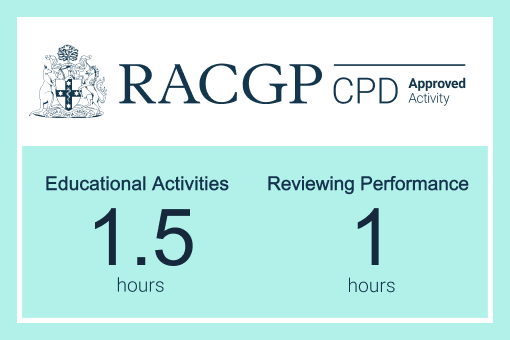
Earn up to XX hours including Measuring Outcomes & Reviewing Performance
A supported CPD program

About this education
With over 33,000 Australians now living with multiple sclerosis (MS) and prevalence on the rise,¹ the role of the General Practitioner is more critical than ever. As this progressive condition places a significant burden on patients, best-practice guidelines have evolved to recommend the early use of high-efficacy therapies to improve long-term outcomes.² This shift in the treatment paradigm presents a crucial need for GPs to enhance their knowledge to confidently identify, refer, and collaboratively manage patients in this modern era of MS care.
This comprehensive CPD collection is designed to equip you with practical, up-to-date knowledge to optimise outcomes for your patients with MS. Through a self-paced eLearning module and an expert-led webinar, you will gain confidence in the entire patient journey, from diagnosis and referral to the latest recommendations for disease-modifying therapies and shared care monitoring. This program also features an innovative 'Supported CPD' option, offering a unique opportunity to apply your learnings through a patient identification activity with personalised, one-on-one guidance from a dedicated Nurse Educator.

ON-DEMAND WEBINAR

Now available on-demand


Description:
Multiple sclerosis (MS) is a chronic disorder with an increasing worldwide incidence,¹ and as a result, GPs play a vital role in managing patients through all stages of their journey. This on-demand webinar builds upon the core learning module, allowing you to apply knowledge to real-world patient scenarios, deepen your understanding of modern disease-modifying treatments (DMTs), and consolidate your role in long-term collaborative care. Gain practical, actionable strategies for optimising care for your patients with MS.
Learning outcomes:
-
Summarise MS prognosis and treatment goals
-
Describe diagnostic criteria and referral pathways
-
Outline the comprehensive approach to MS treatment, including DMTs
-
Recognise best practice (early HETs) and identify patients for switching
-
Identify pre- and post-DMT tests for monitoring and risk mitigation
Presenters:

Dr Nevin John
Neurologist & MS Specialist | Head of Multiple Sclerosis, Monash Health

Dr Romarna Dichiera
General Practitioner & Medical Educator

Dr Natalia Rode
General Practitioner & Medical Educator
ON-DEMAND eLEARNING MODULE


Included activities:
Neurologist & MS Specialist | Head of Multiple Sclerosis, Monash Health
General Practitioner & Medical Educator
Steering committee:

Description:
With the prevalence of multiple sclerosis (MS) rising in Australia to affect over 33,000 people,¹ the role of general practitioners is more vital than ever. As this is a progressive and often disabling condition, GPs are instrumental in recognising symptoms, facilitating referrals, and providing long-term care to help reduce the burden of the disease.
With current best-practice guidelines now recommending the early use of high-efficacy disease-modifying therapies (DMTs) to improve long-term clinical outcomes, this educational activity is designed to enhance your knowledge of MS in this modern treatment era. This module provides a practical primer on modern DMTs and clarifies the GP's role in patient monitoring and treatment reviews. It will equip you to collaborate effectively with neurologists and confidently support your patients with MS.
Learning outcomes:
-
Summarise the general prognosis for patients with MS and the goals of treatment.
-
Describe the current diagnostic criteria for MS and recognise when patients should be referred to a neurologist.
-
Explain current best practice recommendations for MS treatment, including early use of disease-modifying treatments (DMTs).
-
Identify the tests that may be needed before and after a DMT is prescribed, to monitor treatment and mitigate risks.

How does supported CPD work?
Contemporary, flexible CPD for General Practitioners
This CPD program combines the convenience of self-guided online learning (Educational Activities eLearning module + Reviewing Performance activity) with the option of a personalised, supported patient identification activity (Measuring Outcomes activity), guided by a dedicated Nurse Educator from the Wellness Clinical Services Registered Nurse team.
NB: If a supported patient identification activity is not for you, you still have the option of completing the Measuring Outcomes component as a self-guided activity. Get started here


Continuing Professional Development (CPD) Details
The educational activities in this collection have been accredited with RACGP and AMA's CPDHome. See individual activities for details.

Automatic hours lodgement
RACGP and AMA/CPDHome members can now enjoy the convenience of rapid, automatic EA hours lodgement for this education. See your completed hours lodged within 24 hours.* Too easy!
* Requires correct membership details. Update yours now >
Please note that any additional reading or learning connected to this activity can be self recorded with your CPD body.

Praxhub is an accredited Major Provider under the RACGP CPD Program.

Praxhub is a Certified Learning Provider under the AMA's CPDHome CPD Program.

Interested in the supported Patient Identification Activity?
Maximise the impact of your patient identification activity with the support of a highly experienced Nurse Educator from Wellness Clinical Services. Complete the form below and the team will be in touch to assess your eligibility for in-clinic or virtual support.

If you have questions regarding Praxhub's collection or use of your information, please visit our Terms of Use or contact privacy@praxhub.com
Interested in the supported Patient Identification Activity?
Maximise the impact of your patient identification activity with the support of a highly experienced Nurse Educator from Wellness Clinical Services. Complete the form below and the team will be in touch to assess your eligibility for in-clinic or virtual support.
If you have questions regarding Praxhub's collection or use of your information, please visit our Terms of Use or contact privacy@praxhub.com
References:
-
Campbell JA, Simpson-Yap S, Taylor BV, et al. Significantly increasing multiple sclerosis prevalence in Australia from 2010 to 2021. Mult Scler. Aug 2024;30(9):1113-1127. doi:10.1177/13524585241265890
-
Shipley J, Beharry J, Yeh W, et al. Consensus recommendations on multiple sclerosis management in Australia and New Zealand: part 1. Med J Aust. Apr 21 2025;222(7):356-364. doi:10.5694/mja2.52578
Oct 2025 AU-29191