
FREE CPD PROGRAM
Non-Topical Corticosteroids in Primary Care
Earn up to 15 CPD hours across 2 integrated activities inc. 10 hours Measuring Outcomes (MO) and 2 hours Reviewing Performance (RP).
A guide to sensitive sites and steroid-sparing care.


Developed in partnership with St Vincent's Hospital Melbourne

About this education
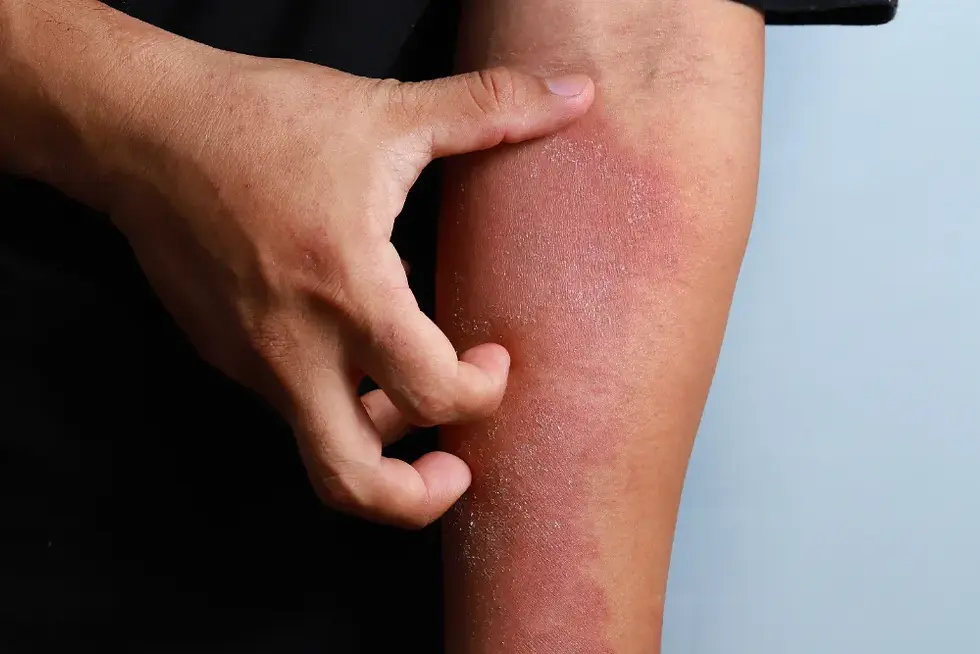
Atopic dermatitis (AD) is the most common inflammatory skin condition managed in primary care, with an Australian lifetime prevalence of 16.4%.¹
Beyond the physical symptoms, the condition imposes a significant burden, associated with higher rates of insomnia, anxiety, and depression.¹ Managing AD is often complex, particularly when treating sensitive sites like the face and eyelids, or addressing common barriers such as steroid phobia.
This practical program empowers General Practitioners to move beyond standard topical corticosteroids and confidently utilise non-steroidal therapies. You will explore evidence-based strategies for using calcineurin inhibitors - including pimecrolimus and tacrolimus - to treat sensitive areas and support long-term maintenance.
Through real-world case studies, you will learn to optimise foundational care, recognise undertreatment, and apply a structured, stepwise approach to decision-making. Whether managing paediatric facial eczema or adult flexural disease, this course provides the clinical framework needed to deliver safe, effective, and steroid-sparing care.


Now available on-demand


Description:
Designed for General Practitioners, this on-demand webinar provides a practical framework for managing atopic dermatitis when topical corticosteroids are insufficient or inappropriate. Focusing on sensitive sites such as the face and eyelids, the session explores the evidence-based use of non-steroidal topical therapies, specifically pimecrolimus and tacrolimus.
Guided by Dermatologist Dr Lena Ly and General Practitioner Dr Paul Grinzi, you will navigate two real-world case studies covering paediatric facial symptoms and adult flexural eczema. Participants will learn to address steroid concerns, optimise foundational care, and implement a stepwise approach to steroid-sparing management.
Learning outcomes:
-
Identify clinical scenarios where topical corticosteroids are insufficient or inappropriate, and where additional topical therapies add value.
-
Differentiate between pimecrolimus and tacrolimus, including indications, strengths, safety considerations, and appropriate site-specific use.
-
Apply a stepwise treatment approach that recognises the value of Topical Calcineurin Inhibitors (TCIs) and how to introduce this to patients using real-world cases to guide communication.
-
Explore common barriers to topical therapies, including cutaneous and ocular reactions, general steroid concerns, and safety concerns.
-
Determine when referral to a dermatologist is warranted for a patient with atopic dermatitis.
Steering committee:

Dr Paul Grinzi
General Practitioner & Medical Educator

Dr Lena Ly
Dermatologist

Dr Cath Beasley
General Practitioner & Medical Educator
Continuing Professional Development (CPD) Details
The educational activities in this collection have been accredited with RACGP, AMA's CPDHome and ACRRM wherever indicated. See individual activities for details.

Automatic hours lodgement
RACGP and AMA/CPDHome members can now enjoy the convenience of rapid, automatic EA hours lodgement for this education. See your completed hours lodged within 24 hours.* Too easy!
* Requires correct membership details. Update yours now >
Please note that any additional reading or learning connected to this activity can be self recorded with your CPD body.

Praxhub is an accredited Major Provider under the RACGP CPD Program.

Praxhub is a Certified Learning Provider under the AMA's CPDHome CPD Program.

eLEARNING MODULE

Wednesday 18 February 2026, 7:30-9:00pm AEDT
Description:
This valuable CPD module provides a structured, evidence-based framework for integrating non-steroidal therapies into primary care practice. Across four practical lessons, you will learn to optimise foundational management and confidently utilise calcineurin inhibitors-pimecrolimus and tacrolimus-for sensitive sites and long-term maintenance.
The content directly addresses common clinical challenges, including managing steroid phobia, recognising undertreatment, and determining when to escalate to systemic therapies or refer to dermatology. Concluding with interactive case studies, this course ensures you can apply a safe, stepwise approach to managing complex atopic dermatitis presentations.
Learning outcomes:
-
Describe when and how to use calcineurin inhibitors in the management of atopic dermatitis.
-
Determine when a patient with atopic dermatitis should be referred to a dermatologist.
-
List additional topical management options for patients with atopic dermatitis who are not responding to topical corticosteroids ± calcineurin inhibitors.
Steering committee:
Dr Paul Grinzi
General Practitioner & Medical Educator
Dr Lena Ly
Dermatologist
Dr Cath Beasley
General Practitioner & Medical Educator

Praxhub acknowledges Arrotex for its support of this education. The sponsor has provided no input into the content of this activity.
Activities in this program
PRESCRIPTION-004718